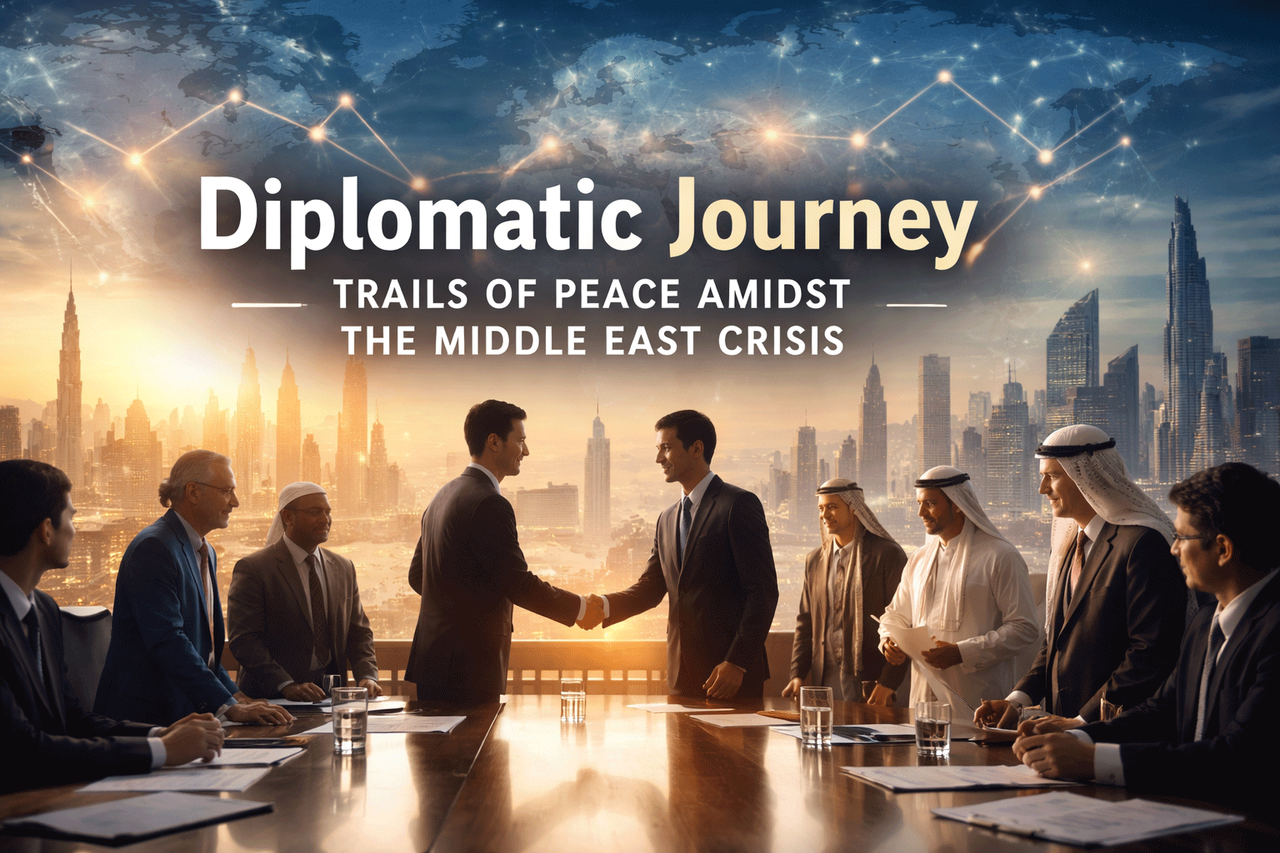
Diplomatic Journey: Trails of Peace Amidst the Middle East Crisis
The Middle East has always been a land where high-stakes politics collide with vast economic opportunities.
For businesses, understanding this landscape is no longer optional it is strategic necessity. Companies that can navigate the delicate balance between diplomacy and commerce stand to unlock opportunities in energy, technology, infrastructure, and finance. Peace initiatives, though complex, often serve as catalysts for innovation, collaboration, and sustainable growth.
Below we Newsminers.net : Gather The Internationa will discuss the diplomatic journey in the Middle East and its impact on the global business world.
Understanding the Geopolitical Landscape
The Middle East is a mosaic of cultures, religions, and political systems. Each country operates within its own historical and social context, influencing how businesses engage with governments, communities, and local markets. Leaders must analyze these dynamics to craft strategies that minimize risk while maximizing opportunity.
Global markets respond quickly to shifts in diplomacy. Oil prices fluctuate, supply chains are disrupted, and investment flows can shift overnight based on negotiation outcomes or sudden escalations. Companies with real-time intelligence gain a distinct advantage, positioning themselves ahead of competitors.
A deeper understanding of regional tensions enables proactive engagement. Multinationals can collaborate with local partners to ensure that their operations align with social priorities, regulatory expectations, and peace-building agendas. This approach reduces friction and strengthens long-term sustainability.
Diplomacy as a Catalyst for Business
Diplomacy in the Middle East is not just a political tool; it is a business enabler. Trade agreements, ceasefire negotiations, and regional partnerships often open doors for investment in sectors ranging from energy to logistics. Companies that understand the diplomatic undercurrents can identify early-stage opportunities others might overlook.
Public-private partnerships flourish in stable, dialogue-driven environments. Governments rely on corporate expertise to develop infrastructure, from transportation networks to energy grids. These collaborations generate economic value while reinforcing social cohesion, creating a win-win scenario for investors and communities alike.
Corporate diplomacy extends beyond negotiation tables. Firms that embed conflict-sensitive strategies, ethical labor practices, and environmental responsibility into their operations build reputational capital. In volatile regions, a strong reputation can translate into preferential contracts, smoother regulatory approvals, and long-term partnerships with local stakeholders.
Investment Opportunities Amid Uncertainty
While the Middle East crisis presents undeniable risks, it simultaneously reveals unique investment opportunities. Renewable energy, technology startups, and infrastructure development are areas where forward-thinking investors can generate impact and returns. Solar and wind energy projects, for example, not only reduce dependency on traditional resources but also align with regional and global sustainability agendas.
Risk mitigation is central to profitable investment. Companies can leverage insurance schemes, form alliances with local entities, and employ political intelligence to navigate uncertainty. Such measures allow firms to act decisively, capturing first-mover advantages in emerging markets that competitors may avoid.
Long-term vision transforms instability into growth. Businesses that integrate social responsibility, community engagement, and diplomatic awareness into their investment strategies contribute to regional stability while cultivating resilient revenue streams. These companies often emerge as trusted partners for governments, multilateral organizations, and local communities.
Read Also: The Grim Deterrent, Iran’s Mass Graves Plan Amid Rising Conflict
The Role of Multinational Corporations
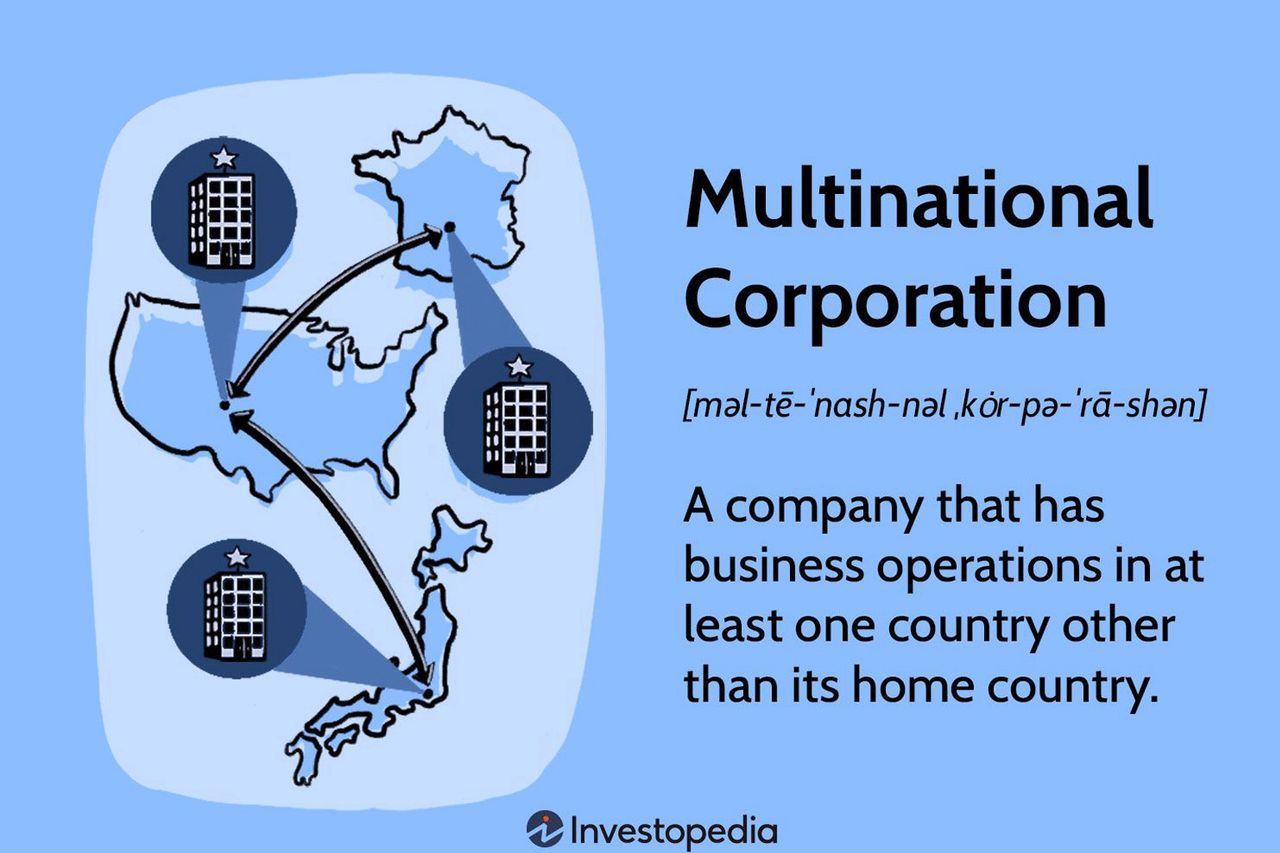
Multinational corporations are uniquely positioned to influence both economic development and diplomatic outcomes. Their operational choices, employment policies, and corporate responsibility initiatives can directly impact regional stability and social cohesion.
By prioritizing ethical investment principles, firms can contribute indirectly to peace-building efforts. Transparent governance, fair labor practices, and sustainable environmental strategies foster goodwill, enabling smoother operations and stronger partnerships across the region.
Engagement in regional dialogues also benefits global firms strategically. Participating in advisory councils, investment forums, or mediation initiatives provides early insight into policy changes, trade regulations, and geopolitical shifts. This foresight allows companies to adjust strategies proactively, rather than reacting to sudden disruptions.
Lessons in Resilience and Strategic Growth
Operating in the Middle East requires resilience and adaptive thinking. Businesses must balance risk with opportunity, leveraging diplomacy, intelligence, and innovation as essential tools for growth. Companies that can pivot quickly while maintaining strategic focus thrive where others falter.
Innovation plays a pivotal role. Technological solutions, from digital infrastructure to renewable energy integration, create competitive advantages and help mitigate the effects of political volatility. Supply chains that are resilient and adaptable allow companies to maintain continuity, even in the face of unexpected disruptions.
In conclusion, the Middle East offers both cautionary lessons and immense promise for global businesses. Companies that combine strategic diplomacy, ethical investment, and adaptive innovation not only achieve sustainable growth but also contribute to regional peace and stability.
For further insights on investment strategies and diplomatic initiatives in the Middle East, visit Newsminers.net : Gather The Internationa to explore how global business leaders navigate complex regional dynamics.
Image Source:
- First Image from thoptvnews.com
- Second Image from investopedia.com
About the Author