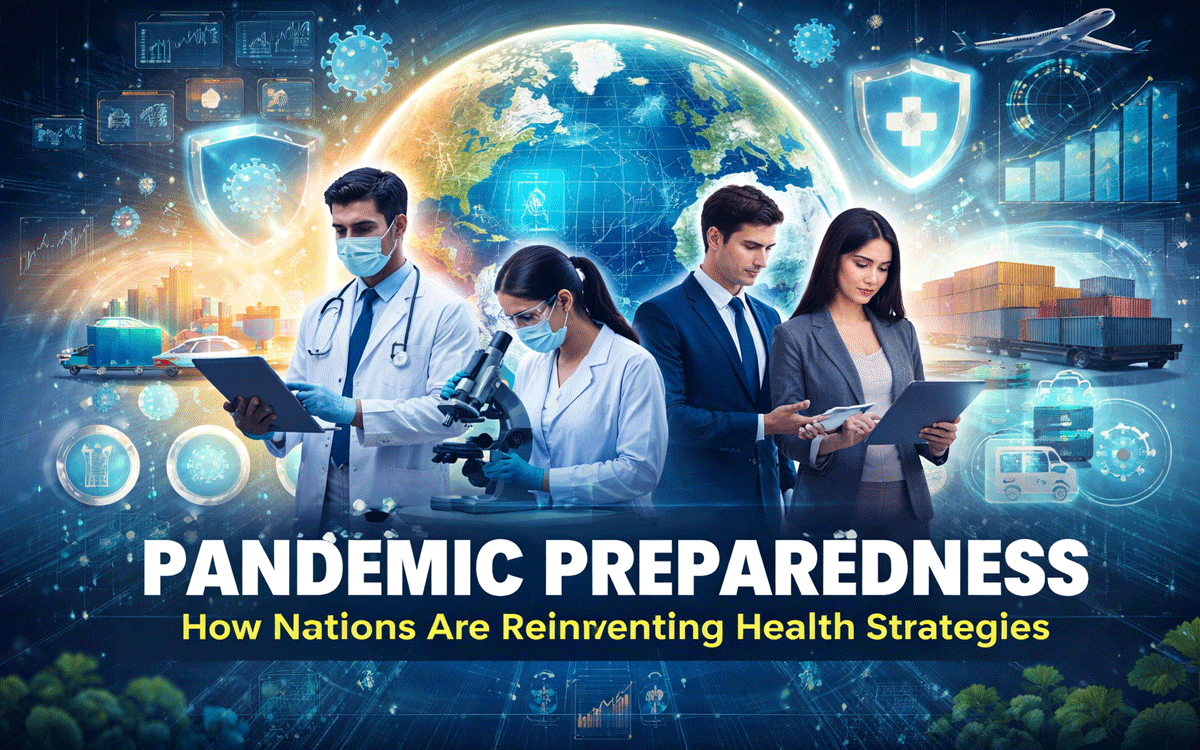
The COVID-19 pandemic revealed glaring vulnerabilities in global health systems and exposed the economic consequences of unpreparedness.
Nations worldwide realized that conventional approaches were insufficient to face a crisis of this scale. Today, governments are reimagining public health strategies, combining technology, collaboration, and business resilience. From smart surveillance systems to agile healthcare policies, these transformations aim not only to save lives but also to protect economies.
Below, we Newsminers.net : Gather The Internationa will discuss how the global pandemic has pushed countries to revolutionize their health and business strategies. This article highlights innovation, public-private collaboration, and advanced technology that are now key to addressing the health crisis.
Strengthening Healthcare Infrastructure
Investing in healthcare infrastructure has become a top priority. Hospitals, laboratories, and diagnostic centers are being upgraded to handle sudden surges in patient numbers. Rapid testing and treatment facilities are now essential, enabling swift response during outbreaks.
Digital health platforms are reshaping patient care. Telemedicine, electronic medical records, and AI-assisted diagnostics allow continuous care even during lockdowns, reducing strain on physical resources. These platforms also enable remote monitoring, helping authorities track disease progression efficiently.
Training healthcare professionals is equally critical. Cross-disciplinary programs that integrate crisis management, epidemiology, and technology ensure that staff are ready for unexpected emergencies. Continuous skill development strengthens both local and national health systems, preparing them for future pandemics.
Advanced Surveillance and Early Detection
Surveillance is the first line of defense against pandemics. Real-time monitoring systems, powered by AI and big data, are being used to track outbreaks and predict high-risk areas with remarkable accuracy.
Wearable devices, mobile applications, and IoT sensors now collect crucial health metrics. Governments use this information to detect anomalies early and implement targeted interventions, reducing the spread of infections.
Partnerships with tech companies accelerate innovation in predictive modeling. By analyzing historical data and real-time trends, policymakers can allocate resources efficiently, enforce smart lockdowns, and minimize economic disruption, all while maintaining public health standards.
Public-Private Partnerships
Collaboration between governments and the private sector has proven vital during health crises. Pharmaceutical companies, biotech startups, and logistics firms are partnering with public institutions to accelerate vaccine development and distribution.
Supply chains for essential medical equipment and protective gear are being strengthened through these partnerships. Coordination ensures rapid delivery to high-need areas, preventing shortages that could exacerbate the crisis.
Private sector innovation also drives research and technology deployment. When businesses and governments work together, resilient health ecosystems emerge, benefiting public health and economic stability simultaneously.
Read Also: The Secrets to a Healthy Life, Keeping Your Body and Mind Strong
Business Continuity and Resilience

Pandemics threaten global economies, making business resilience a priority. Remote work, automation, and cloud-based operations have become critical to maintaining productivity during disruptions.
Governments are supporting businesses with financial incentives, flexible policies, and emergency relief programs. These measures encourage innovation while reducing financial risks, enabling companies to adapt quickly to changing conditions.
Diversifying supply chains further strengthens resilience. Businesses investing in multiple suppliers, local production, and contingency logistics minimize vulnerabilities, ensuring uninterrupted services and long-term market stability even during prolonged crises.
Conclusion: A Future of Strategic Preparedness
The pandemic has permanently reshaped the intersection of health and business. Nations investing in healthcare infrastructure, advanced surveillance, and public-private partnerships are better equipped to face future crises with minimal disruption.
Businesses that adopt digital solutions, flexible operations, and proactive risk management thrive even in uncertain times. The collaboration between governments and private entities creates resilient, sustainable systems that protect both lives and economies.
Proactive planning, technological innovation, and cross-sector collaboration are no longer optional they are essential. By embedding these strategies into national policies and business models, the world can build a more secure, healthy, and economically stable future.
For more in-depth insights on global pandemic preparedness and innovative health strategies, visit World Health Newsminers.net : Gather The Internationa explore guidelines, research, and international best practices.
Image Source:
- First Image from: thoptvnews.com
- Second Image from: aston.ac.uk
About the Author